






Approval-gated actions in the tools you already use.
Scriben for clinicians · In preview
The patient leaves.
The work shouldn’t follow you home.
A real ballpoint pen captures the visit from the desk. No screen turned away from the patient, no laptop between you. What comes back is a draft where every sentence links to the moment it was said, and the lines that trace to nothing are marked as such.
§The clinical side is in preview and we are still building it. The pen and the iOS app ship today and work as described. The clinic console, EHR filing and the front-desk board are not open for sign-up yet — ask for a pilot and we will bring you in as they open.
Trusted by professionals from
Free & Fast DeliveryOn every order
30-Day Easy ReturnNo questions asked
3-Month WarrantyAgainst manufacturing defects
Customer SupportReal people, by email
The visit is not the problem
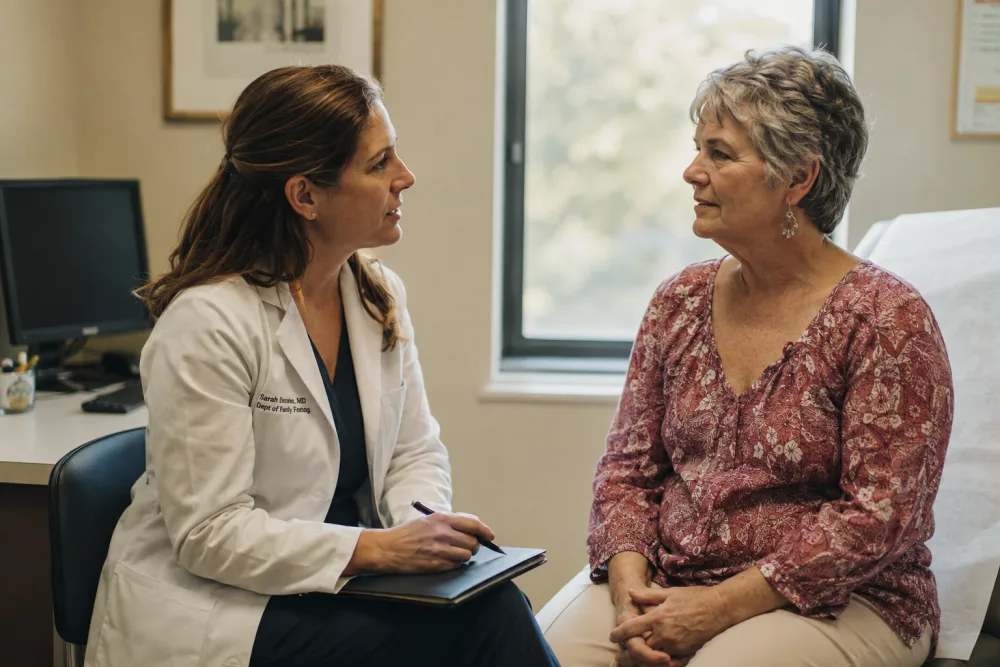
The visit should happen between doctor and patient, not doctor and laptop.
The consultation has to become a note, a chart update, follow-up work, often a code, and context for the next visit twelve weeks from now. Most of that gets done after hours, from memory, because during the visit you were typing.
Ambient scribes moved the typing off the visit. They do not tell you where a given line in the note came from.
A note is easier to sign when the sentence can take you back to the moment it came from.
Where it earns its place
Consultations, MDTs, phone
follow-ups and remote reviews.
The four settings a note has to survive, including the two where a screen does not belong.

The consultation
The history arrives in the patient’s order, not the template’s. The draft sorts that out afterwards.

Multidisciplinary discussion
Decisions, and who owns the next step, without a scribe in the room.
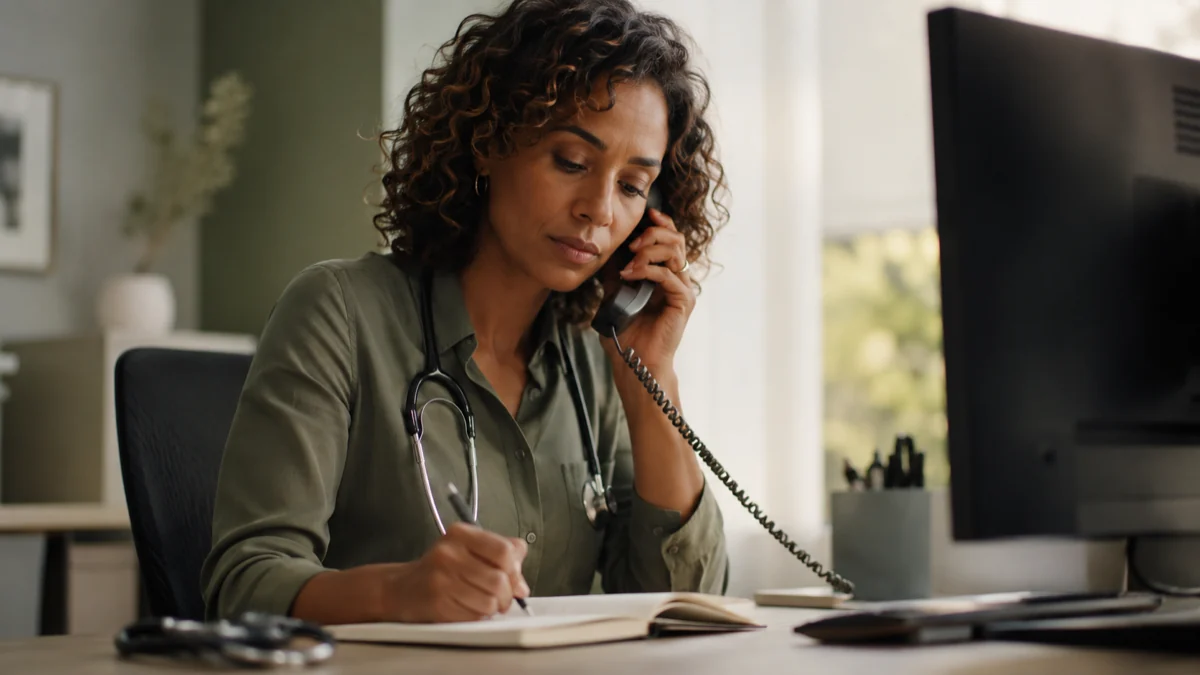
Telephone follow-up
A five-minute call that still has to become a note by the end of the day.
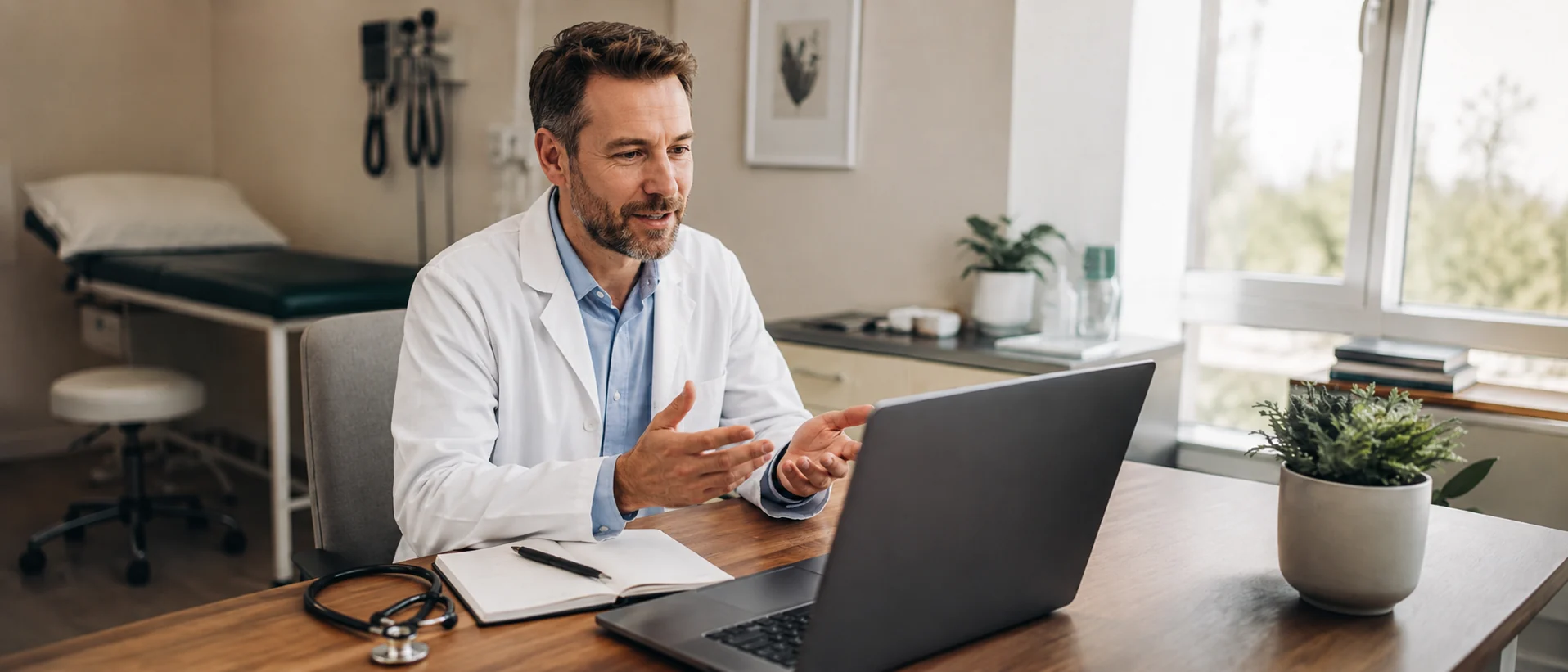
Remote review
The same record whether the patient was in the room or on the screen.
The alternatives, honestly
The screen you turn away
from the patient is still
in the room.
Ambient scribes moved the typing off the visit. The laptop, the phone and the question of where the note came from all stayed exactly where they were.
A phone on the desk
Between you and a patient it is never only a recorder, and it is not a device a clinic wants holding anything.
- Changes what a patient will tell you
- Has to stay unlocked for the whole visit
- Storage full, battery low, call incoming
A laptop turned side-on
The screen you turn away from the patient is still in the room, and typing is listening at half strength.
- Split attention for the whole visit
- You look at the screen, not the patient
- Nothing at all at a bedside or a home visit
A pen on the desk
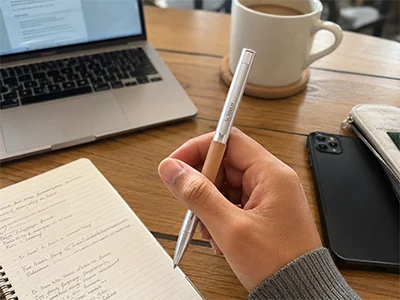
Everyone already knows what a pen is. It changes nothing about how the room feels.
- One press, then you forget it is running
- 18 hours, recorded to the pen itself
- No phone, no network, no app open
- It writes on paper the entire time
How this works for you
Your clinic day,
the room to the claim.
One clinic day, from the first history of the morning to the claim that goes out at the end of it.
10:15 am
You stay with the patient. The history arrives in their order, not the template’s, and nothing on your desk turns away from them.
10:32 am
Your next patient is already in the room. The draft is waiting when you come out, and every line of it traces back to something that was actually said.
10:34 am
You read it, change what you want changed, and approve it. Nothing files itself.
End of clinic
The coding level is derived by the 2021 AMA two-of-three rule, with the reasoning shown, so you can check it rather than trust it.
You leave when clinic ends, not when the notes do.
Traceability
Every sentence traces back
to when it was said.
Select a line in the draft and the transcript moves to the turn it was built from, with its position in the recording. One line below traces to nothing, so it is marked, not quietly left in.
Draft note
Select a sentence
Transcript · synthetic clinical example
00:04Good to see you again. How have the headaches been?
00:11Better, I think. About two a week now, down from most days.
00:26And the light sensitivity? Still there, but less.
00:41Blood pressure today is one forty-eight over ninety-two. Last time it was one fifty over ninety.
00:55Pulses are fine, no swelling.
01:10Let’s keep everything as it is and see you again in three months.
§The encounter shown here is synthetic and the patient is fictional. Scriben states nothing that was not said. No vital sign, dosage or lab value that was not spoken, and no diagnosis you did not make. Anything heard but uncertain stays uncertain.
From visit to filed work
Nothing files itself.
Each step produces something you look at before it moves. The clinician approves; the software does not decide it was confident enough.
The schedule arrives
The day comes in from the chart, so capture is bound to a patient deliberately rather than guessed at afterwards.
Prior context, before you walk in
What is still unresolved, what the last plan was, and what is still waiting on someone else.
The pen captures the visit
From the desk. No laptop turned away from the patient, and no connection needed to record.
A draft, with its evidence attached
The note, the follow-up work it implies, and the coding observations, each carrying the transcript it came from.
You review and approve
Signed note out, encounter reference echoed back. Nothing carrying PHI leaves the clinical surface.
Before a practice can say yes
The three things
you have to check.
Coding, where the note lands, and what happens to the data. Three answers, in one place, rather than three sections of scrolling.
The model reports three observations and shows the transcript evidence for each. The published 2021 AMA two-of-three rule turns those into a level, so the level is arithmetic on the evidence rather than a judgement the model made.
| Element | Observed | Evidence |
|---|---|---|
| Problems addressed | Moderate | 00:11, “two a week now, down from most days” |
| Data reviewed | Limited | 00:41, blood pressure reviewed in visit |
| Risk of management | Moderate | 00:55, prescription drug management |
| By the two-of-three rule | 99214, moderate problems and moderate risk.Reaching the next level would need high risk or extensive data. Neither is evidenced in this visit, so no wording is offered for it. | |
One EHR adapter exists today and it is Canvas Medical. Everything else sits behind the same vendor-neutral interface, which is why a new one is an adapter rather than a rewrite. We would rather say that plainly than imply coverage we do not have.
- Canvas Medical
The EHR Scriben works with today. The schedule comes in, the draft goes back, and the encounter reference is written once you have approved it.In pilot - Any other EHR
Every EHR sits behind the same vendor-neutral adapter, so a new one is an adapter rather than a rewrite.On request - Calendar, Gmail and Slack
The day around the visit: the referral letter, the recall, the message to a colleague. Nothing is sent without you approving it.In the app
Nothing carrying PHI leaves the clinical surface. If your practice runs on an EHR not listed here, the adapter is the conversation to have: talk to us about a pilot.
A badge tells you somebody was audited once. This is what happens to the recording, and every line of it is drawn from the system description our auditors read.
- On the pen
- Audio is encrypted on the device itself. It records to its own 400 hours of storage with no phone and no network, so nothing has to sync until you choose to.
- On your phone
- The local cache is a SQLCipher database. Its 256-bit key is generated on that install, lives in the iOS Keychain, is released only after the first unlock of the device, and never leaves it.
- In transit
- TLS 1.2 or better on every hop, with no exceptions for internal traffic.
- At rest
- Audio, transcripts and the database are encrypted under keys we hold and manage in Cloud KMS, not the provider’s default keys. They rotate automatically every 90 days.
- Where it lives
- One United States region, for storage and compute alike. The audio bucket enforces public access prevention and logs every access to a separate bucket. The database has a private IP and no public route.
- Who touched it
- Every read, list and delete of a recording emits an audit metric. Audit logs stream to a store with no expiry, which is what satisfies the six-year documentation retention HIPAA asks for.
- Deleting it
- Account deletion runs as a queued pipeline with a dead letter queue, not a flag set on a row.
- The agreement
- Scriben operates as a Business Associate. The infrastructure runs under a Business Associate Agreement executed with Google Cloud on 19 August 2026, and we sign one with your clinic before a pilot begins.
- If something goes wrong
- Breach notification without unreasonable delay, and no later than 60 days from discovery.
There is no such thing as HIPAA certification, so nobody can hold one and we do not claim it. What is above is what the system does, and every line of it is drawn from the system description our auditors read. Ask us for it during a pilot and you get the document, not a summary of it.
Scriben Clinic
The console the day
actually runs on.
The pen captures the room. This is where the encounter becomes a note, a code and a follow-up, and where you check every line of it before it goes anywhere.
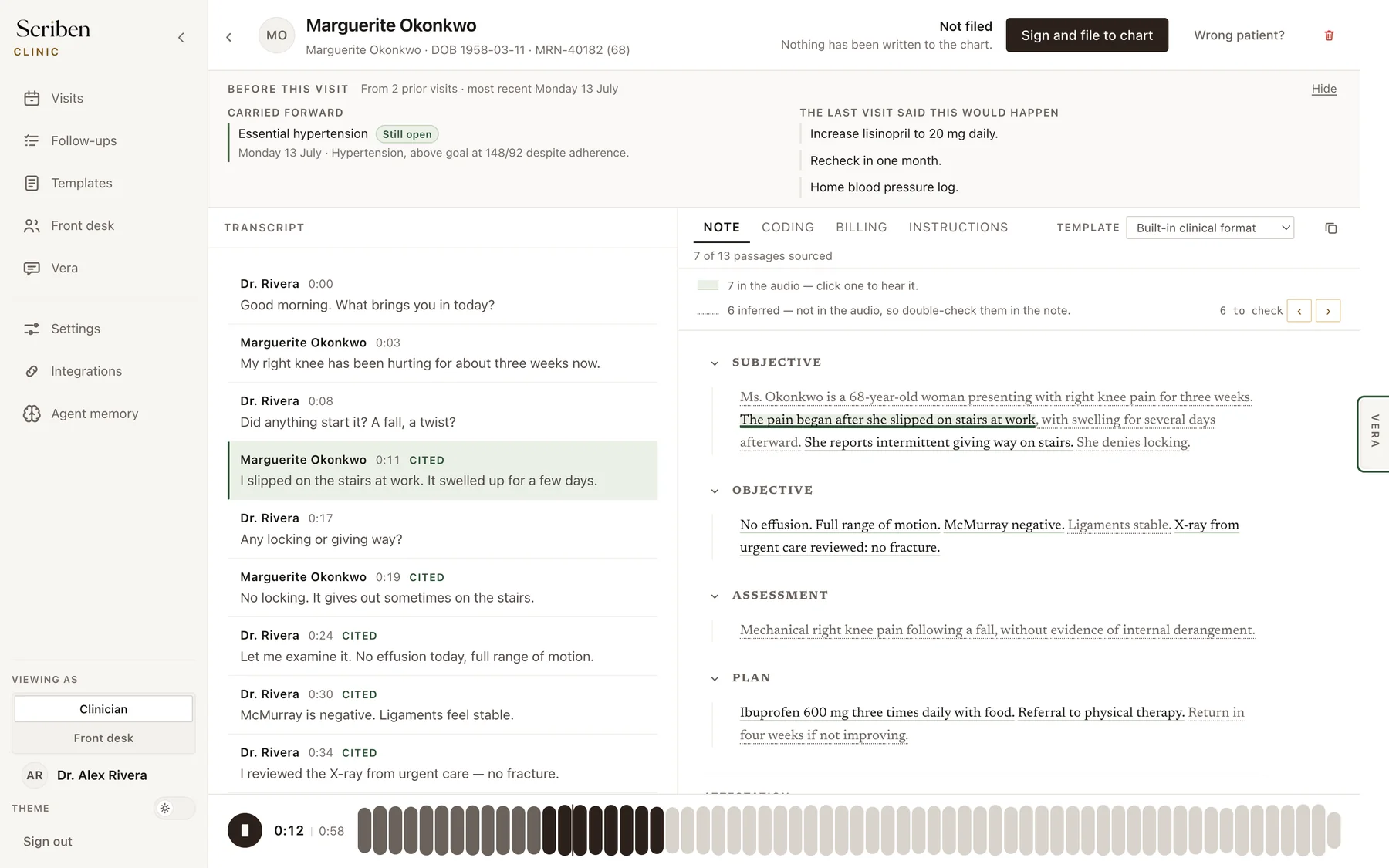
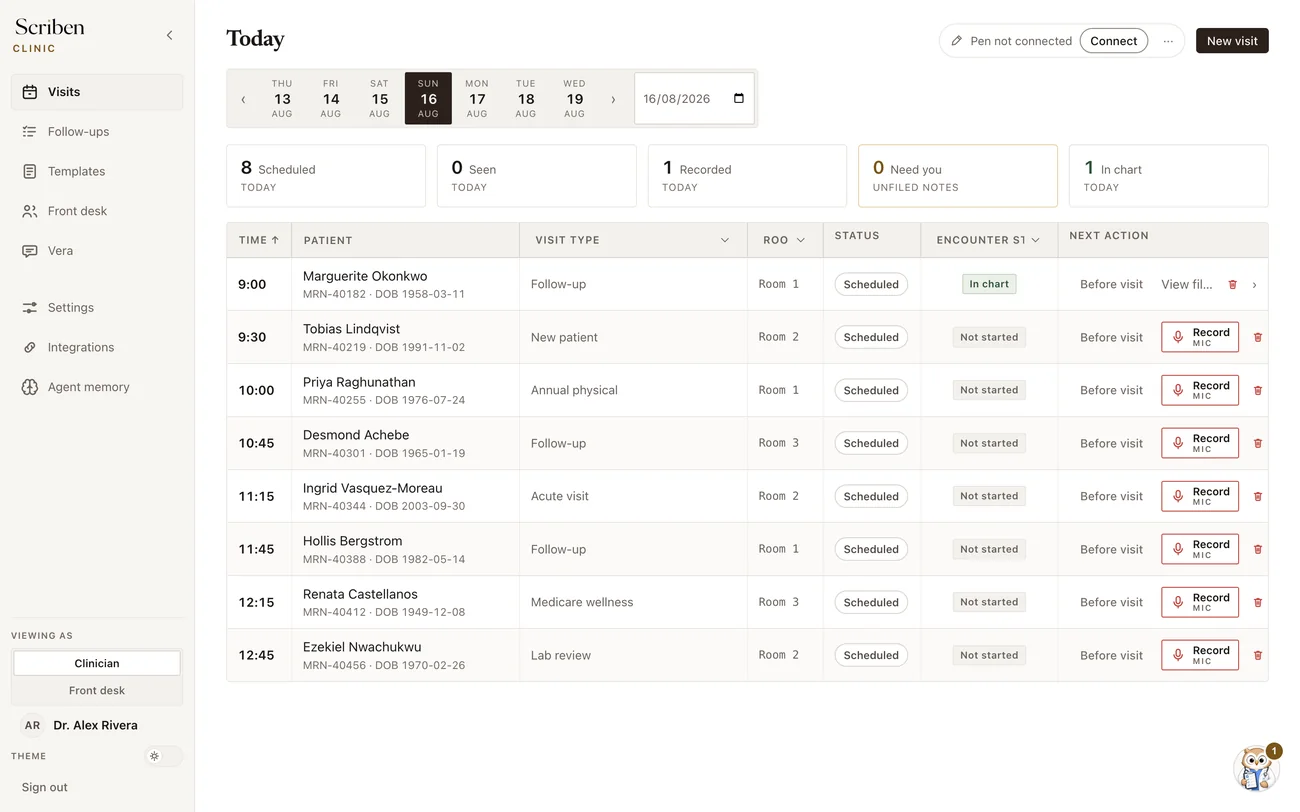
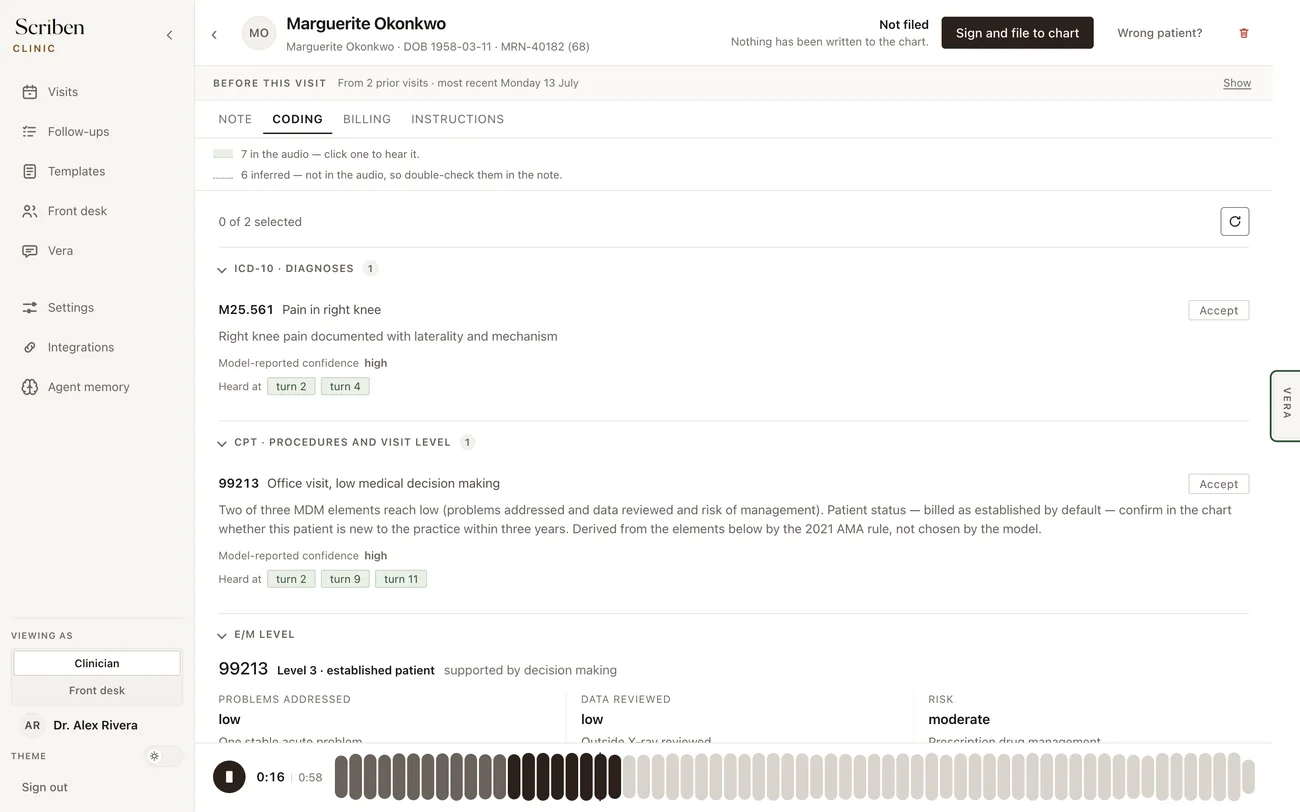
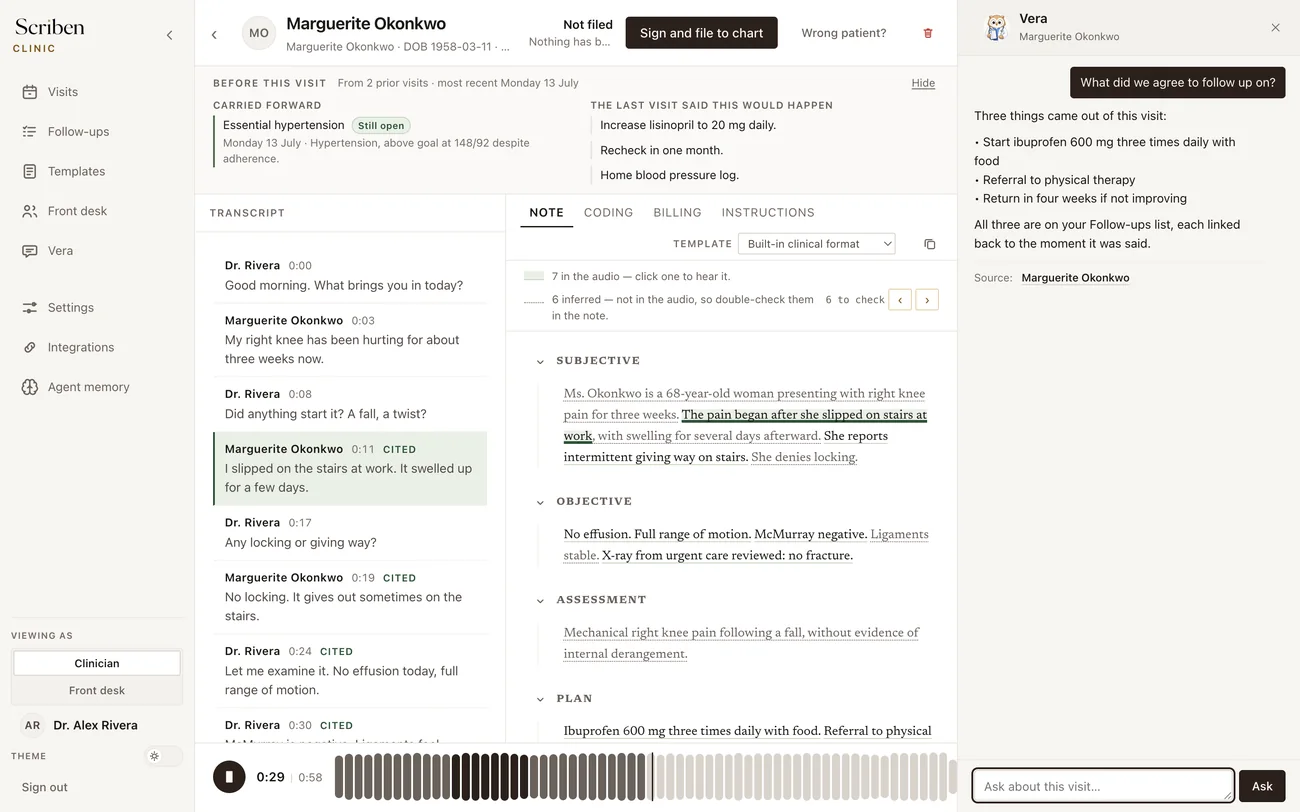
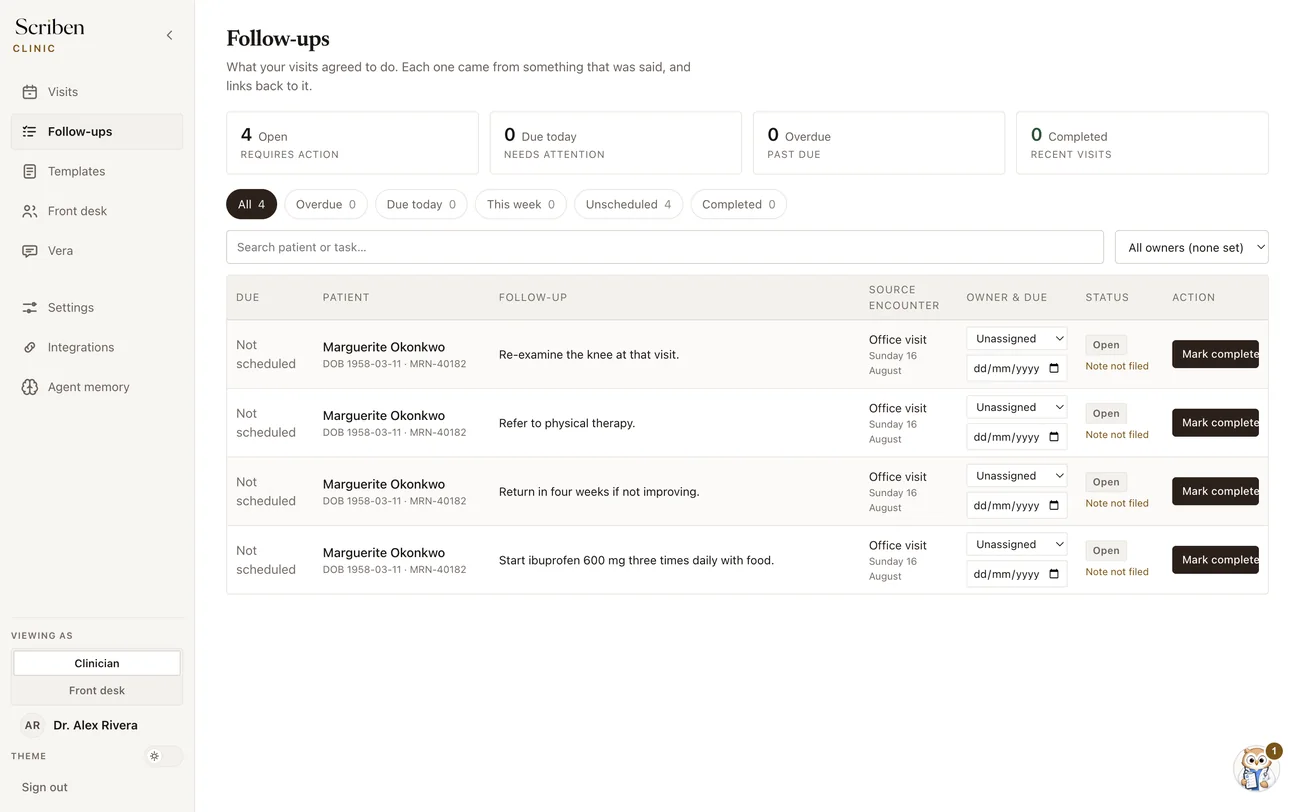
Screens from the Scriben Clinic walkthrough, recorded against a synthetic clinic. Every patient, encounter and chart in them is fixture data. No real record was opened to take these.
The work around the visit, connected
Fifteen native integrations.
Thousands more within reach.
Scriben connects general work across email, calendars, files, and approved follow-up. Clinical chart filing stays inside the governed clinical workflow, not a generic app connector.
GmailCalendarDriveOutlookSlackLinearHubSpotNotion
Also native: OneDrive, Microsoft Teams, Jira, GitHub, Apple Calendar, and Apple Reminders.
Send outcomes into other tools. Source audio and transcripts stay private.
Authorized access for Claude, ChatGPT, Zoom AI Companion, and compatible agents.
The instrument
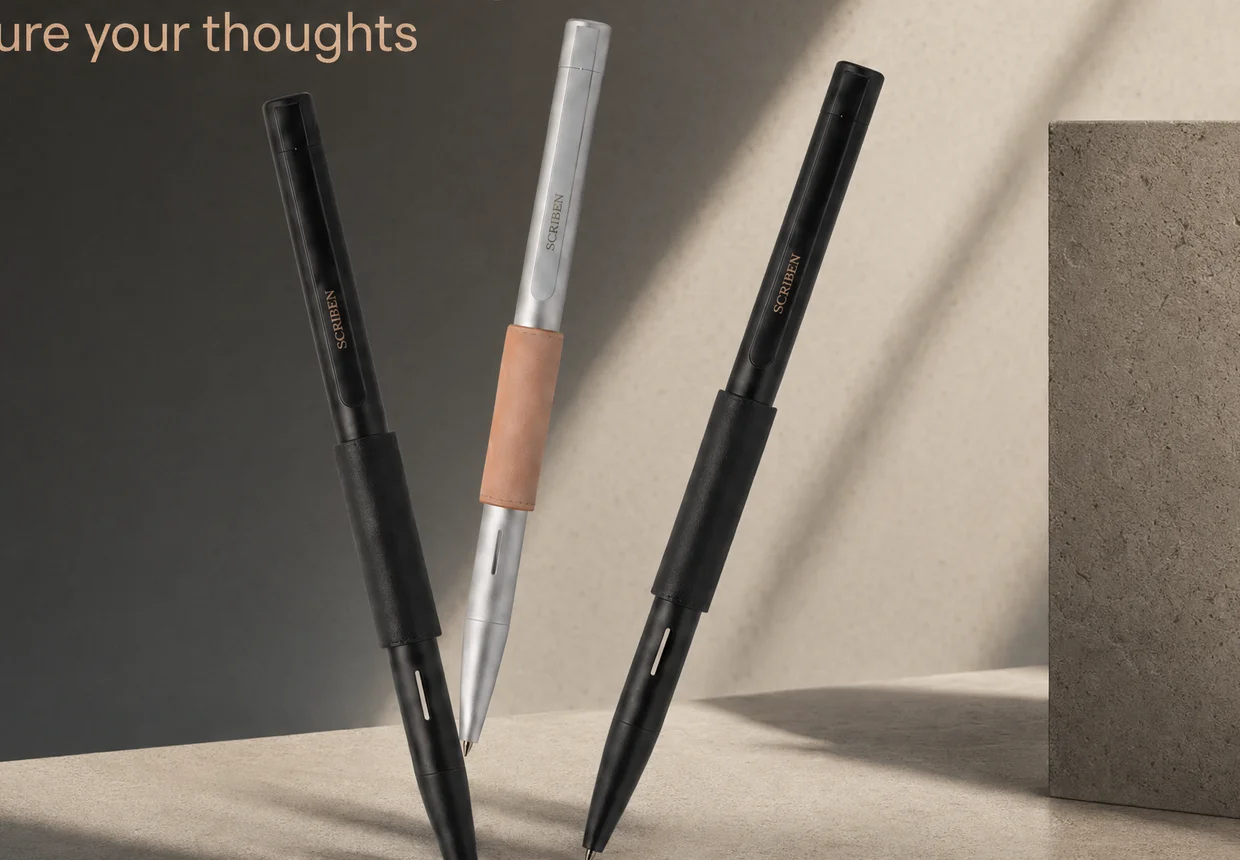
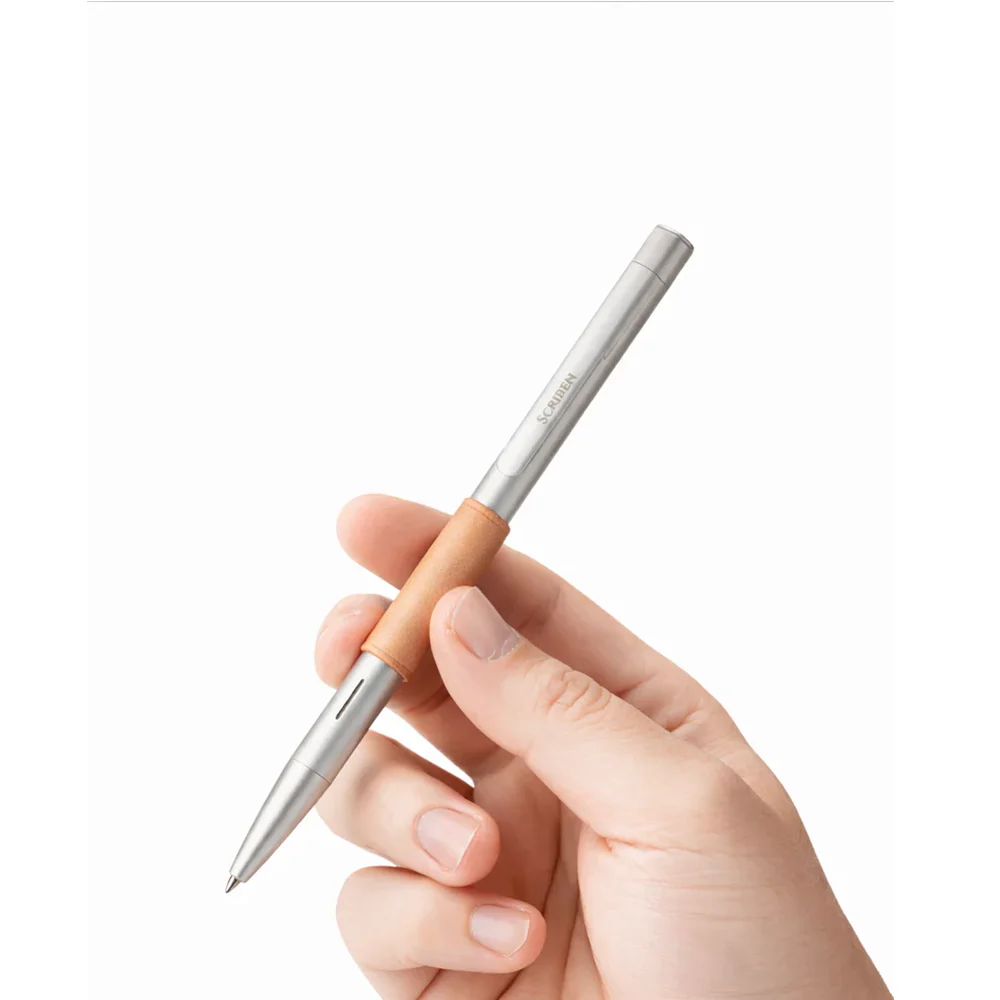
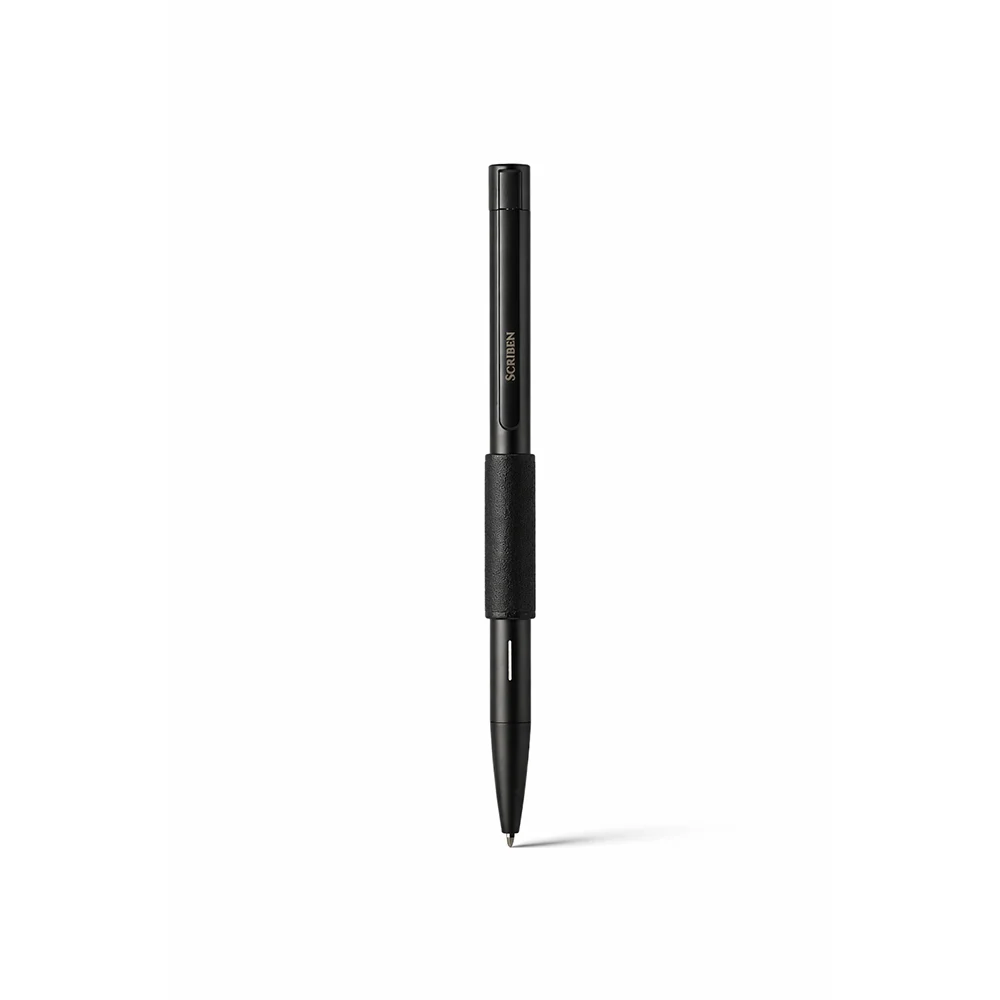
A pen that writes on paper
and gives you back the evening.
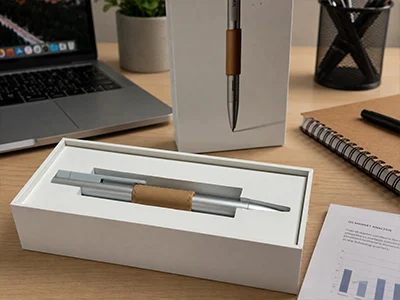
It records a full clinic day on one charge, holds the audio on the pen, and needs no connection in the room to work.
18Hours of continuous recording
400 hrsOf storage on the pen
0.6 mmA real ballpoint. Replaceable refill
NoneConnectivity needed to record
Recognized
Five design honors in 2026.
Red Dot, MUSE, American Good Design, London Design and TITAN. Juries that judged the object itself, not anything we said about it.





Before you buy
The questions clinicians ask.
Can I trace a sentence in the note back to the conversation?
Yes. That is the point of the design. Each line links to the transcript turns it was built from and to the position in the recording where they were spoken. A line that traces to nothing is given a dotted underline and labelled unsourced rather than left to look like the rest.
Who approves the clinical output?
You do. The draft, the follow-up work and the coding observations are all presented for review. Nothing is filed, sent or actioned until a clinician approves it.
How is the coding level determined?
The model reports observations with their transcript evidence. The published 2021 AMA two-of-three rule derives the level from those observations. The level is not chosen by the model, and where the evidence does not support a higher level, no wording is offered for one.
Is Scriben HIPAA compliant?
HIPAA has no certification scheme, so any vendor claiming to be certified is describing something that does not exist. What we can tell you is specific: Scriben operates as a Business Associate, the infrastructure runs under an executed Business Associate Agreement with Google Cloud, audio and transcripts are encrypted in transit and at rest under keys we manage, access to a recording is logged per user, and audit logs are kept for the six years the documentation rule asks for. We sign a Business Associate Agreement with your clinic before a pilot starts. The section above sets out the rest.
Do I need my phone or a connection during the visit?
No. The pen records to its own 400 hours of storage with no phone and no network, for up to 18 hours. You sync afterwards.
What does it cost?
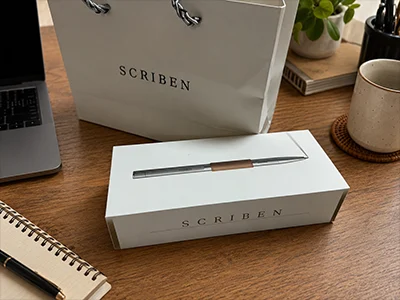
The Scriben AI Pen is $99 as a one-time purchase. It includes the pen, leather sleeve, refills and quick start guide. Clinic deployments are handled as a pilot rather than a checkout.
§Recording and consent requirements vary by jurisdiction and setting, and clinical recording carries its own obligations. Record with the patient’s knowledge and consent, and in line with the rules that apply to your practice.